
Explore stories by their AFNHA and America250 themes
-
Forest Abundance - Ancient mountains of the Appalachian Forest feature abundant mixed hardwood and red spruce forests, where mountain microclimates and northern and southern species converge to create some of the most biodiverse forest ecosystems in North America
Crucible of Isolation - People from many cultures came together in the Appalachian Forest, where geographic isolation and the rough mountain terrain fostered a distinctive Appalachian culture of self-reliance and connection to the land, expressed through folkways and living traditions that enrich America today.
Logging Boom Builds the Nation - On the cusp of the 20th century, the expansion of railroads opened widespread harvest of the Appalachian Forest in a logging boom that helped fuel industrial expansion for the Eastern United States but devastated the landscape and altered mountain economies.
Resilient Forest -Recovery of the landscape from the logging boom shows the resilience of the Appalachian Forest, with scientific management today conserving forestlands for multiple purposes including ecological stewardship, recreation and tourism, and sustainable harvest of forest products.
-
Power of Place - Engagement with places, land, and communities shape how we live, who we are, and what we consider significant to care for and preserve.
We the People - Inclusion of all people, especially diverse people that have often been excluded (including women, free and enslaved African Americans, Indigenous people, immigrants, people with disabilities, the poor, and many others), is essential for full participation and representation in the nation’s political, economic, and cultural life.
Democracy and Justice - From the Declaration of Independence, through progress and setbacks in the fights for rights and justice, our society evolves in understanding and expressions of equity, democracy, and civic engagement.
Stories by AFNHA Theme
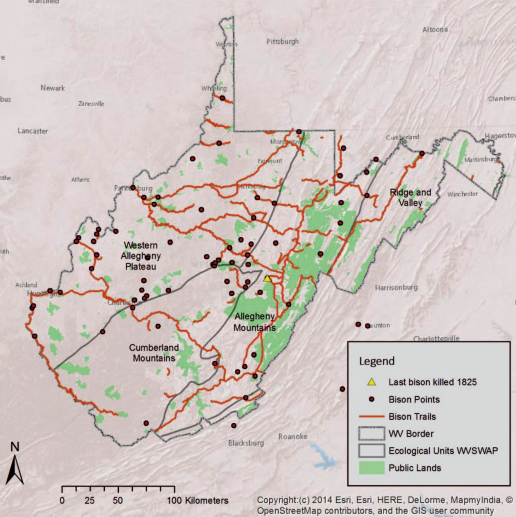
The history of bison in the AFNHA unfolds like a windy trail that aligns with a stream of human change. Their presence and proliferation in the region was first blazed by indigenous tribes who brought a fire regime to the Appalachian forest, creating and maintaining the savannah and meadows that invited, hosted, and fed migrating buffalo. When European colonists came to West Virginia, they found much needed salt by way of the bison. Yet the settlers' domineering conception of the New World broke the balance between humanity and bison leading to their abrupt extermination in West Virginia. The cars and locomotives that now traverse these paths of least resistance owe a great debt to the herd-minded engineers they now succeed.

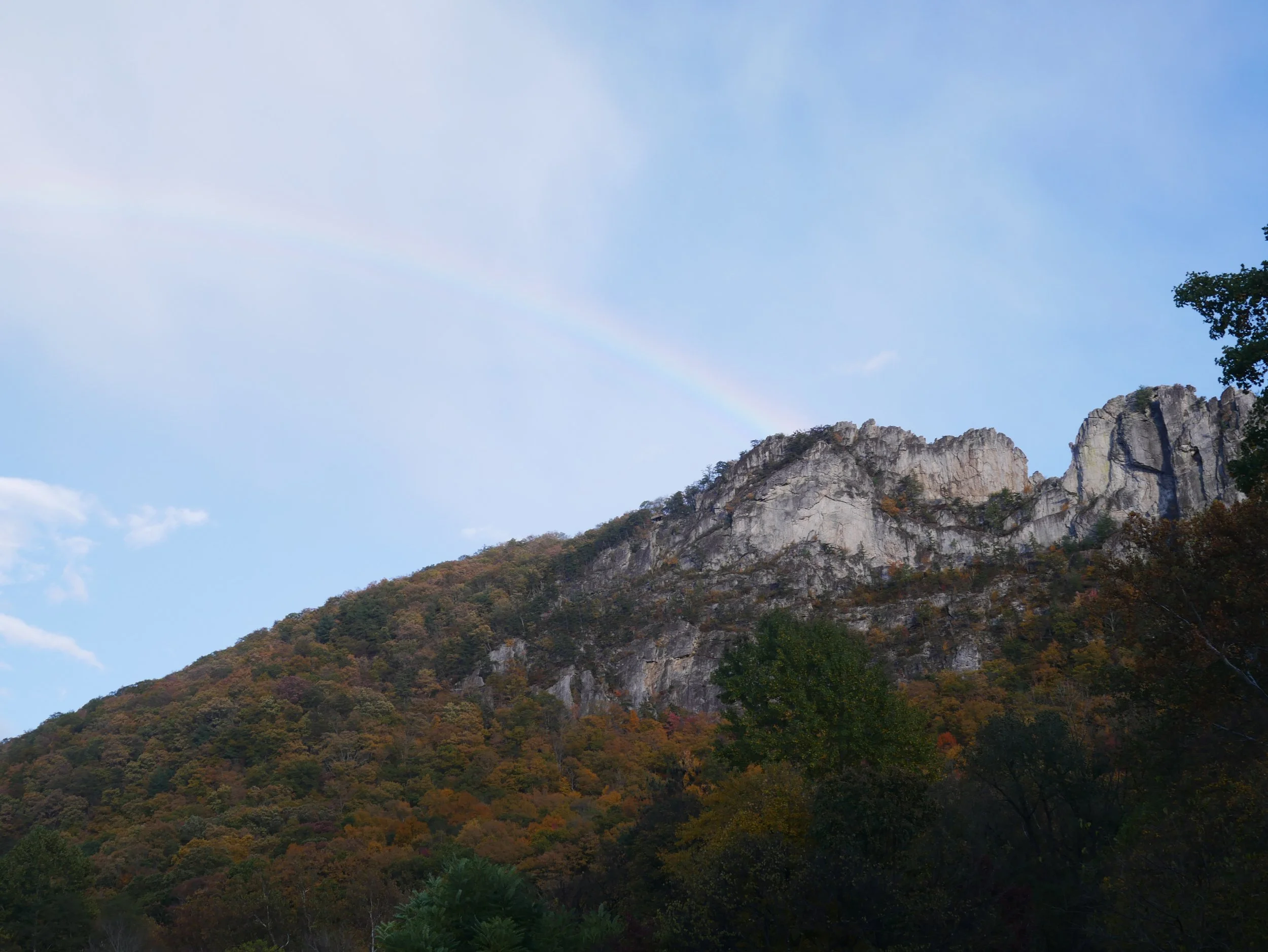
Today all can explore Seneca Rocks because it is public land that sits within the Spruce Knob-Seneca Rocks National Recreation Area, the first congressionally designated national recreation area established by the USDA Forest Service. Modern-day visitors to the Seneca Rocks Unit of the Spruce Knob-Seneca Rocks National Recreation Area appreciate the unique amalgam of geological history, rich culture, and fruitful recreational opportunities. Although the rock face is wont to steal the spotlight, the diversity and wealth of culture associated with the area is equally - if not more - deserving of it.

Let’s spend some time thinking about the organisms that have stood tall for well over 250 years. That’s right- we’re talking about trees. There are some trees in our region that have existed for over 250 years or are descendants of trees that play a role in history - from the Pringle Tree in Buckhannon to Cathedral State Park.

For European settlers, Hampshire County, Virginia in the early 1800’s was an unknown territory on the periphery of American society. The land, while previously inhabited by Native Americans, was only recently reached by Europeans. For immigrants like the Pugh’s coming from Wales, the Capon Valley was reminiscent of their former homeland. Establishing a homestead in the remote valley required self reliance, innovative spirit, and sheer will. David Pugh would carve out a legacy into the Capon Valley, one that continues to shine as a beacon honoring a family’s determination to establish a place they could call home.

Six years after the end of the Civil War, and three years after the Fourteenth Amendment declared that formerly enslaved people held rights as American citizens, Jane Gates purchased a house in Cumberland, Maryland. Jane Gates was born into slavery and denied the opportunity to learn how to read or write. Despite her illiteracy, oral history tells that she was the first black woman in Allegany County to have a bank account; she is known to have signed her name on legal documents with an X. With these achievements lies a great mystery. How did Jane, illiterate and listed in census records as a nurse and a laundress afford a house so soon after gaining her freedom? This question was pondered by her descendants, Dr. Henry Louis Gates Jr. and John Gates, when they dove into their ancestry. What they found was an inspiring, but incomplete history of their great-great-grandmother.

North River Mills was once a vibrant community. The main road west from Winchester, the Great Wagon Road, passed through a gap known as Parker's Gap, probably the earliest name for North River Mills. During the French and Indian War there were deadly encounters and abductions around North River Mills. Dr. James Craik, Washington's personal physician, purchased many acres in North River Mills. Gustavus Croston, Revolutionary War veteran, lived in the village. The name, North River Mills, came into use in the 19th century. In the mid 19th century North River Mills was bypassed by the new east-west road, Route 50. North River Mills was destined to decline while communities along Route 50 would grow. During the Civil War, the presence of hostile Union and Confederate troops forced many residents to make hard choices. In addition to agriculture, over the years North River Mills had much industry. Now there are only two residents, but the town hosts an annual festival or homecoming the day before Mothers Day.

If you’re driving down Route 50 through Mineral County, blink and you might miss a curious stone structure on the side of the road. If you were a stagecoach passenger peering out from your horse-drawn carriage this L-shaped building would be a cause for celebration. In the age of horse-drawn wagons and carriages, travel was no small feat and the people who relied on Traveller’s Rest viewed the process of getting around fundamentally different from today. For them, the landscape of the Appalachian Forest could be wild and unpredictable and the journey itself was always far from mundane.

West Virginia’s famed old-time folk family, the Hammons, live in both the mythologies and histories of Appalachia. Through the Hammons and their music, we gain a peek into the history of Appalachian old-time music and its diverse sources. Burl and Currence learned many of their tunes from Black folk artists like Grafton Lacy from Braxton County. Lacy is no exception; Black artists have made founding contributions in the genre. Their role often remains untold, or in the case of Lacy, is sparsely mentioned in the stories of Appalachian folk music. The origins of old-time music, ranging from West Africa to the British Isles, come alive in between the lines of the music itself, where its hidden history becomes clear.

The United States Constitution was drafted in 1787. While the Founding Fathers, former British subjects, rejected the British Parliament's model with its House of Lords and Commons, they were not entirely without inspiration. European governments offered little guidance for democracy at the time. However, existing models closer to home provided valuable insights. There are clear parallels between the Constitution and indigenous systems like the Great Law of Peace.

Many towns in West Virginia experienced lightning-fast growth as they became a part of a network of railroads. These towns usually had abundant resources like coal or timber that provided jobs for the towns’ residents. Many towns were built by companies– employees of coal companies would live in houses owned by the company they worked for. However, this was not always the case. One town that was built by residents instead of a coal company is Thomas, West Virginia.
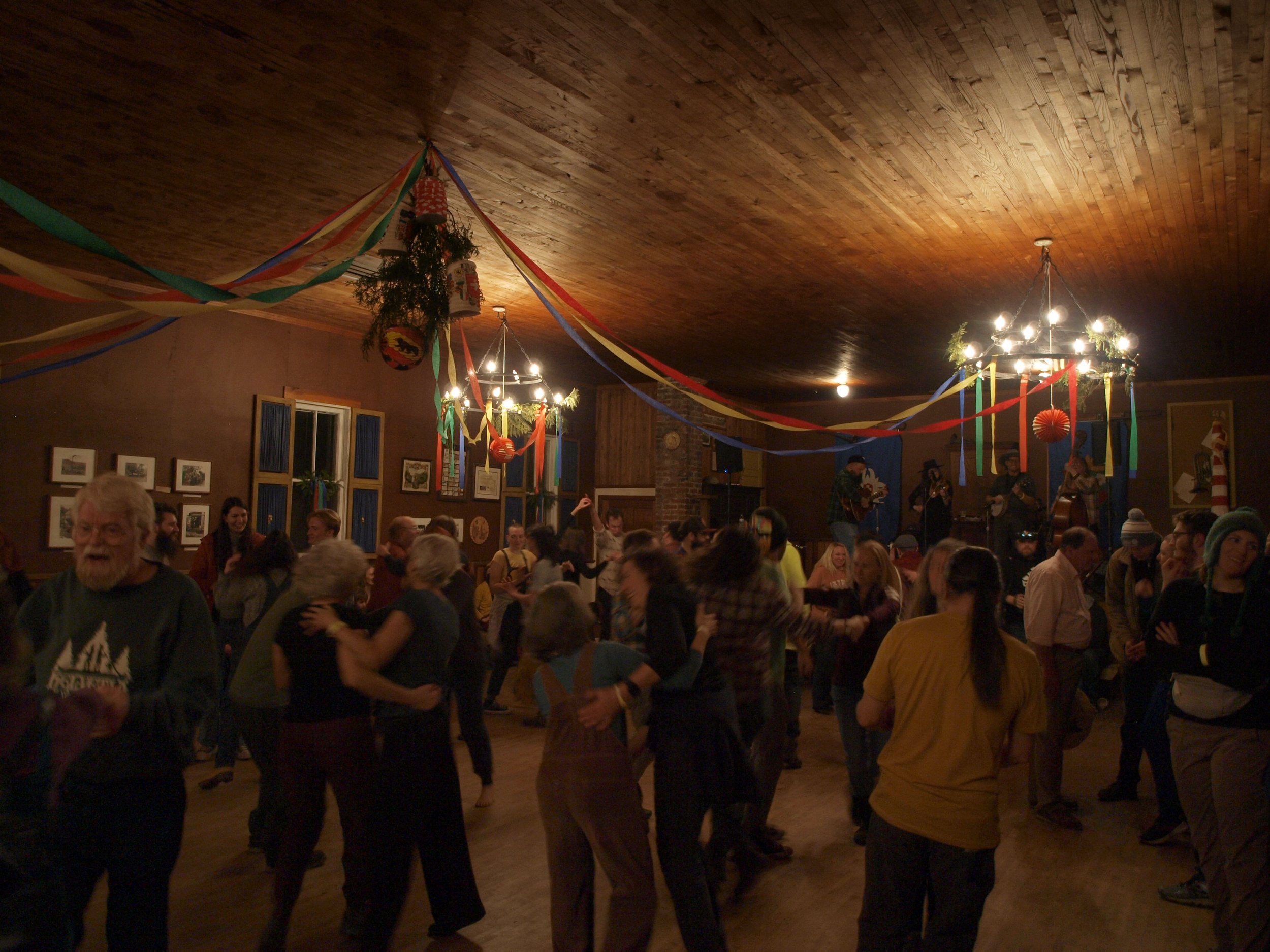
The dark days of winter are full of traditions spreading cheer and ringing in the new year. Throughout the AFNHA region, many communities come together to celebrate in their own special way. Read more about the unique traditions of Shanghai and Fasnacht.
Many contemporary people believe West Virginia was nothing more than a hunting ground for the migratory Native Peoples. People without names, without connection. Yet, in my own survey, I am continuously reminded that West Virginia was home to many Indigenous communities, and these connections were held tight by long-term settlements. We see this by the traces they left behind, such as pottery, copper, shell, luxury items, burial sites, and old-growth trees. Many of the sites that archaeologists research are my direct ancestors, and the ancestors of existing descendant communities throughout the Eastern United States.
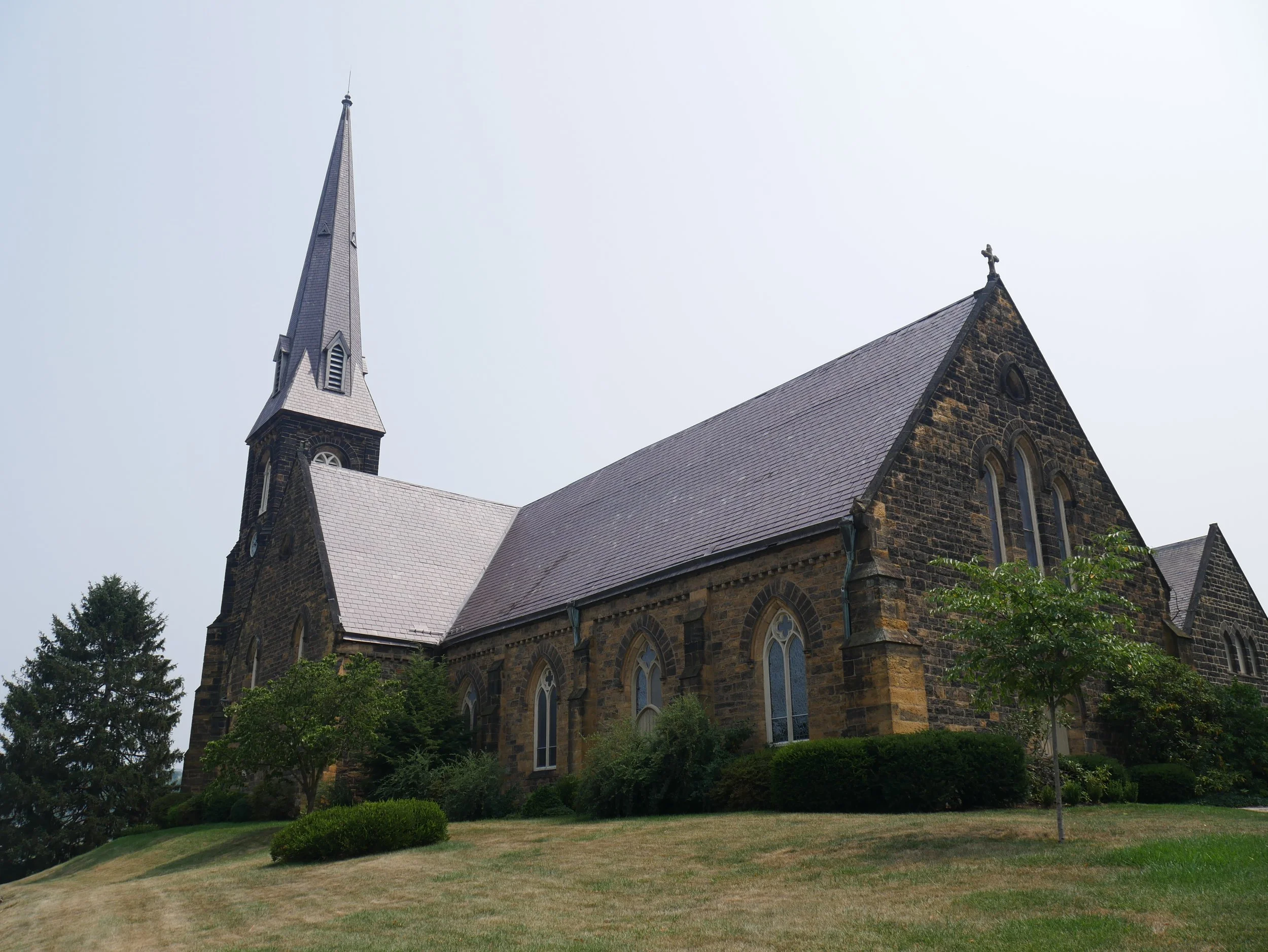
Situated at the top of the hill in the center of Cumberland, Emmanuel Parish stands for all to see. Visitors are drawn to the church on the hill with the steeple. Once inside, Emmanuel tells the story of our country from its earliest times to today. Situated at the crossroads of Native American trails and natural waterways, Cumberland and Emmanuel were known roads of freedom. It is believed that the original foundations underneath the church were used as a stop on the Underground Railroad.
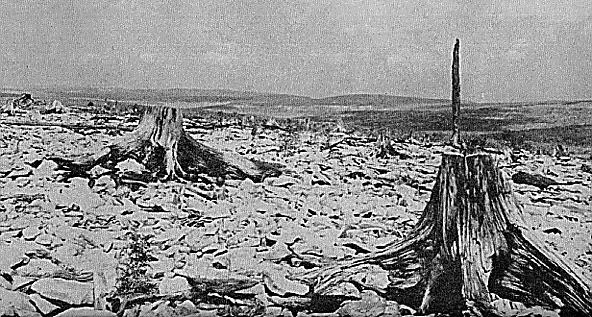
Like the barren surface of the moon, the crest of Cabin Mountain stretched out in a desolate field of rock. Botanist Harry Allard came across this stark image when he walked in the wastelands of Grant County’s spruce forests following an era of intensive logging and roaring forest fires. The life and death of West Virginia’s high altitude valleys is a story of a hidden boreal ecosystem, the transformative harvest of the forest, and its devastating aftermath, leaving little but the seeds for a hopeful rebirth.

If the unmistakable rust-red and ochre brick walls of the Golden Rule Building could talk, what stories would they tell? Most likely they would beam about the town of Belington, a place that has long relied on the Golden Rule and in the building’s darkest hour, brought it love and new life.

In July of 1877, a strike on the Baltimore and Ohio railroad threw the United States into a crisis that shook its very foundations. The outburst became the first nationwide general strike in US history, travelling across major and minor railroad lines and spreading into countless other industries. In the Appalachian Forest, battlegrounds erupted in Allegany, Morgan, and Mineral County in the mountains and woods along the B&O line. The uprising crossed divisions of race, gender, and status as the downtrodden rose up against an absolute power.

When Elizabeth Dye Walker lived in the Old Stone House of Mineral County in the beginning of the twentieth century, getting around employed a diversity of methods. It could mean a horseback ride, a horse-drawn buggy, or taking the Twin Mountain & Potomac Railroad. Where the railroad once ran, across the Northwestern Turnpike from the Stone House, now lies a trucking facility. Elizabeth Dye Walker’s childhood in the Stone House was colored by these various modes for motion, the resilient horse-drawn buggy and sled, a fruitless fruit-filled train, and a peculiar horseless carriage.

By 1910 there were more than 150 orchards in Morgan and Hampshire counties. A 1919 census of orchards by the WV Department of Agriculture recorded eight orchards in Paw Paw, with a crop of 105,000 bushels. In 1940, the Consolidated Orchard Company constructed a modern packing plant with a capacity of 130,000 bushels, which grew to a capacity of 200,000+ bushels by 1963. On April 16, 1948 Consolidated Orchard hosted the dedication of the B&O Railroad “Paw Paw” Pullman car. B&O chose to honor “Paw Paw” because of the town’s importance as an apple producing center, and the prominence of Henry Miller, Jr as a producer, shipper, and apple authority.

First Lady Eleanor Roosevelt was deeply involved in all aspects of the Arthurdale homestead. She watched over the process as the federal government began turning the Arthurdale farm into a community for the long-term unemployed. Mrs. Roosevelt visited Arthurdale in December of 1934 and announced the plans for the homesteaders' first Christmas to the newspapers. Their first Christmas allowed the homesteaders to work together for a joyous occasion.

Following the Battle of Blair Mountain, a U.S. Army Air Service Martin NBS-MB-1*—Bomber No. 5—crashed near Drennen, Nicholas County, West Virginia. Its role in suppression of the largest armed uprising since the Civil War was thereby etched into the hills of West Virginia and into the labor history of our Nation.
Like the barren surface of the moon, the crest of Cabin Mountain stretched out in a desolate field of rock. Botanist Harry Allard came across this stark image when he walked in the wastelands of Grant County’s spruce forests following an era of intensive logging and roaring forest fires. The life and death of West Virginia’s high altitude valleys is a story of a hidden boreal ecosystem, the transformative harvest of the forest, and its devastating aftermath, leaving little but the seeds for a hopeful rebirth.

When Western Maryland was a mysterious and distant territory to most Americans, for German immigrants, it felt just like home. Among the villages they settled in, one in present-day Garrett County came to be known nostalgically as New Germany. Today, this village is the location of New Germany State Park. Over a century after its settlement, New Germany hosted the first ski resort south of the Mason-Dixon Line and earned the region the moniker of “Maryland’s Alps.” In between the first German settlers and the ski resort, the land was transformed and made anew. To return to its alpine reputation, New Germany has witnessed the rise and fall of timbering, the growth of scientific forestry, and the snowballing success of outdoor recreation.
Today all can explore Seneca Rocks because it is public land that sits within the Spruce Knob-Seneca Rocks National Recreation Area, the first congressionally designated national recreation area established by the USDA Forest Service. Modern-day visitors to the Seneca Rocks Unit of the Spruce Knob-Seneca Rocks National Recreation Area appreciate the unique amalgam of geological history, rich culture, and fruitful recreational opportunities. Although the rock face is wont to steal the spotlight, the diversity and wealth of culture associated with the area is equally - if not more - deserving of it.

Sustainable forestry has been on people’s minds for over one hundred years. Started in 1906, the experimental Rothkugel Plantation is the first example of applied sustained forestry practices in the West Virginia lumber industry.
Stories by America 250 Theme
In July of 1877, a strike on the Baltimore and Ohio railroad threw the United States into a crisis that shook its very foundations. The outburst became the first nationwide general strike in US history, travelling across major and minor railroad lines and spreading into countless other industries. In the Appalachian Forest, battlegrounds erupted in Allegany, Morgan, and Mineral County in the mountains and woods along the B&O line. The uprising crossed divisions of race, gender, and status as the downtrodden rose up against an absolute power.
North River Mills was once a vibrant community. The main road west from Winchester, the Great Wagon Road, passed through a gap known as Parker's Gap, probably the earliest name for North River Mills. During the French and Indian War there were deadly encounters and abductions around North River Mills. Dr. James Craik, Washington's personal physician, purchased many acres in North River Mills. Gustavus Croston, Revolutionary War veteran, lived in the village. The name, North River Mills, came into use in the 19th century. In the mid 19th century North River Mills was bypassed by the new east-west road, Route 50. North River Mills was destined to decline while communities along Route 50 would grow. During the Civil War, the presence of hostile Union and Confederate troops forced many residents to make hard choices. In addition to agriculture, over the years North River Mills had much industry. Now there are only two residents, but the town hosts an annual festival or homecoming the day before Mothers Day.
When Western Maryland was a mysterious and distant territory to most Americans, for German immigrants, it felt just like home. Among the villages they settled in, one in present-day Garrett County came to be known nostalgically as New Germany. Today, this village is the location of New Germany State Park. Over a century after its settlement, New Germany hosted the first ski resort south of the Mason-Dixon Line and earned the region the moniker of “Maryland’s Alps.” In between the first German settlers and the ski resort, the land was transformed and made anew. To return to its alpine reputation, New Germany has witnessed the rise and fall of timbering, the growth of scientific forestry, and the snowballing success of outdoor recreation.
When Elizabeth Dye Walker lived in the Old Stone House of Mineral County in the beginning of the twentieth century, getting around employed a diversity of methods. It could mean a horseback ride, a horse-drawn buggy, or taking the Twin Mountain & Potomac Railroad. Where the railroad once ran, across the Northwestern Turnpike from the Stone House, now lies a trucking facility. Elizabeth Dye Walker’s childhood in the Stone House was colored by these various modes for motion, the resilient horse-drawn buggy and sled, a fruitless fruit-filled train, and a peculiar horseless carriage.
West Virginia’s famed old-time folk family, the Hammons, live in both the mythologies and histories of Appalachia. Through the Hammons and their music, we gain a peek into the history of Appalachian old-time music and its diverse sources. Burl and Currence learned many of their tunes from Black folk artists like Grafton Lacy from Braxton County. Lacy is no exception; Black artists have made founding contributions in the genre. Their role often remains untold, or in the case of Lacy, is sparsely mentioned in the stories of Appalachian folk music. The origins of old-time music, ranging from West Africa to the British Isles, come alive in between the lines of the music itself, where its hidden history becomes clear.
The United States Constitution was drafted in 1787. While the Founding Fathers, former British subjects, rejected the British Parliament's model with its House of Lords and Commons, they were not entirely without inspiration. European governments offered little guidance for democracy at the time. However, existing models closer to home provided valuable insights. There are clear parallels between the Constitution and indigenous systems like the Great Law of Peace.
Many towns in West Virginia experienced lightning-fast growth as they became a part of a network of railroads. These towns usually had abundant resources like coal or timber that provided jobs for the towns’ residents. Many towns were built by companies– employees of coal companies would live in houses owned by the company they worked for. However, this was not always the case. One town that was built by residents instead of a coal company is Thomas, West Virginia.

The Rosie the Riveters of WWII are an inspiration to all for their courage and commitment and for blazing the trail that changed the way women were viewed in the workforce. Ruth Linger Bell was one of these great women who stayed home to serve the government

The Rosie the Riveters of WWII are an inspiration to all generations for their courage and commitment and for blazing the trail that changed the way women were viewed in the workforce. The "Rosie the Riveter" movement is credited with helping push the number of women working up to 20,000,000 in four years. My mother, Leona Phares, was one of these great women who left their homes in the AFNHA region to work in factories in larger cities.

Down the road from the Green Bank Telescope is the hometown of a person who helped pave the way for space exploration. NASA Mathematician Katherine Johnson was born in White Sulphur Springs in 1918. At Langley Memorial Aeronautical Laboratory, Katherine was invited to work with the space task force and was the only non-white, non-male member of the team who worked to get a man to space.
First Lady Eleanor Roosevelt was deeply involved in all aspects of the Arthurdale homestead. She watched over the process as the federal government began turning the Arthurdale farm into a community for the long-term unemployed. Mrs. Roosevelt visited Arthurdale in December of 1934 and announced the plans for the homesteaders' first Christmas to the newspapers. Their first Christmas allowed the homesteaders to work together for a joyous occasion.
Situated at the top of the hill in the center of Cumberland, Emmanuel Parish stands for all to see. Visitors are drawn to the church on the hill with the steeple. Once inside, Emmanuel tells the story of our country from its earliest times to today. Situated at the crossroads of Native American trails and natural waterways, Cumberland and Emmanuel were known roads of freedom. It is believed that the original foundations underneath the church were used as a stop on the Underground Railroad.

Laura Jackson Arnold was the younger sister of Thomas “Stonewall” Jackson, famed Confederate general, who forged her own path to support the Union in the divided community of Beverly, western Virginia. During the Civil War she served a nurse to help soldiers on both sides, and she later became active in veterans’ organizations and was celebrated as “Mother of the Regiment.”
Like the barren surface of the moon, the crest of Cabin Mountain stretched out in a desolate field of rock. Botanist Harry Allard came across this stark image when he walked in the wastelands of Grant County’s spruce forests following an era of intensive logging and roaring forest fires. The life and death of West Virginia’s high altitude valleys is a story of a hidden boreal ecosystem, the transformative harvest of the forest, and its devastating aftermath, leaving little but the seeds for a hopeful rebirth.
If the unmistakable rust-red and ochre brick walls of the Golden Rule Building could talk, what stories would they tell? Most likely they would beam about the town of Belington, a place that has long relied on the Golden Rule and in the building’s darkest hour, brought it love and new life.
For European settlers, Hampshire County, Virginia in the early 1800’s was an unknown territory on the periphery of American society. The land, while previously inhabited by Native Americans, was only recently reached by Europeans. For immigrants like the Pugh’s coming from Wales, the Capon Valley was reminiscent of their former homeland. Establishing a homestead in the remote valley required self reliance, innovative spirit, and sheer will. David Pugh would carve out a legacy into the Capon Valley, one that continues to shine as a beacon honoring a family’s determination to establish a place they could call home.
When Western Maryland was a mysterious and distant territory to most Americans, for German immigrants, it felt just like home. Among the villages they settled in, one in present-day Garrett County came to be known nostalgically as New Germany. Today, this village is the location of New Germany State Park. Over a century after its settlement, New Germany hosted the first ski resort south of the Mason-Dixon Line and earned the region the moniker of “Maryland’s Alps.” In between the first German settlers and the ski resort, the land was transformed and made anew. To return to its alpine reputation, New Germany has witnessed the rise and fall of timbering, the growth of scientific forestry, and the snowballing success of outdoor recreation.
If you’re driving down Route 50 through Mineral County, blink and you might miss a curious stone structure on the side of the road. If you were a stagecoach passenger peering out from your horse-drawn carriage this L-shaped building would be a cause for celebration. In the age of horse-drawn wagons and carriages, travel was no small feat and the people who relied on Traveller’s Rest viewed the process of getting around fundamentally different from today. For them, the landscape of the Appalachian Forest could be wild and unpredictable and the journey itself was always far from mundane.
The history of bison in the AFNHA unfolds like a windy trail that aligns with a stream of human change. Their presence and proliferation in the region was first blazed by indigenous tribes who brought a fire regime to the Appalachian forest, creating and maintaining the savannah and meadows that invited, hosted, and fed migrating buffalo. When European colonists came to West Virginia, they found much needed salt by way of the bison. Yet the settlers' domineering conception of the New World broke the balance between humanity and bison leading to their abrupt extermination in West Virginia. The cars and locomotives that now traverse these paths of least resistance owe a great debt to the herd-minded engineers they now succeed.
By 1910 there were more than 150 orchards in Morgan and Hampshire counties. A 1919 census of orchards by the WV Department of Agriculture recorded eight orchards in Paw Paw, with a crop of 105,000 bushels. In 1940, the Consolidated Orchard Company constructed a modern packing plant with a capacity of 130,000 bushels, which grew to a capacity of 200,000+ bushels by 1963. On April 16, 1948 Consolidated Orchard hosted the dedication of the B&O Railroad “Paw Paw” Pullman car. B&O chose to honor “Paw Paw” because of the town’s importance as an apple producing center, and the prominence of Henry Miller, Jr as a producer, shipper, and apple authority.
Today all can explore Seneca Rocks because it is public land that sits within the Spruce Knob-Seneca Rocks National Recreation Area, the first congressionally designated national recreation area established by the USDA Forest Service. Modern-day visitors to the Seneca Rocks Unit of the Spruce Knob-Seneca Rocks National Recreation Area appreciate the unique amalgam of geological history, rich culture, and fruitful recreational opportunities. Although the rock face is wont to steal the spotlight, the diversity and wealth of culture associated with the area is equally - if not more - deserving of it.
Let’s spend some time thinking about the organisms that have stood tall for well over 250 years. That’s right- we’re talking about trees. There are some trees in our region that have existed for over 250 years or are descendants of trees that play a role in history - from the Pringle Tree in Buckhannon to Cathedral State Park.
The dark days of winter are full of traditions spreading cheer and ringing in the new year. Throughout the AFNHA region, many communities come together to celebrate in their own special way. Read more about the unique traditions of Shanghai and Fasnacht.
Many contemporary people believe West Virginia was nothing more than a hunting ground for the migratory Native Peoples. People without names, without connection. Yet, in my own survey, I am continuously reminded that West Virginia was home to many Indigenous communities, and these connections were held tight by long-term settlements. We see this by the traces they left behind, such as pottery, copper, shell, luxury items, burial sites, and old-growth trees. Many of the sites that archaeologists research are my direct ancestors, and the ancestors of existing descendant communities throughout the Eastern United States.
Sustainable forestry has been on people’s minds for over one hundred years. Started in 1906, the experimental Rothkugel Plantation is the first example of applied sustained forestry practices in the West Virginia lumber industry.
In July of 1877, a strike on the Baltimore and Ohio railroad threw the United States into a crisis that shook its very foundations. The outburst became the first nationwide general strike in US history, travelling across major and minor railroad lines and spreading into countless other industries. In the Appalachian Forest, battlegrounds erupted in Allegany, Morgan, and Mineral County in the mountains and woods along the B&O line. The uprising crossed divisions of race, gender, and status as the downtrodden rose up against an absolute power.
Six years after the end of the Civil War, and three years after the Fourteenth Amendment declared that formerly enslaved people held rights as American citizens, Jane Gates purchased a house in Cumberland, Maryland. Jane Gates was born into slavery and denied the opportunity to learn how to read or write. Despite her illiteracy, oral history tells that she was the first black woman in Allegany County to have a bank account; she is known to have signed her name on legal documents with an X. With these achievements lies a great mystery. How did Jane, illiterate and listed in census records as a nurse and a laundress afford a house so soon after gaining her freedom? This question was pondered by her descendants, Dr. Henry Louis Gates Jr. and John Gates, when they dove into their ancestry. What they found was an inspiring, but incomplete history of their great-great-grandmother.

After nearly 100 years since its construction, the former Paw Paw Black School continues to convey its historic association with the Town of Paw Paw's education and social history. For more than 25 years the building served to educate Black students, and as a place of social gathering for the small number of Black families in Paw Paw who lived in the vicinity of the school. The building remains largely unchanged since that time. The important role the school played in Black education and the Black community led to the building being listed on the National Register of Historic Places in 2024.
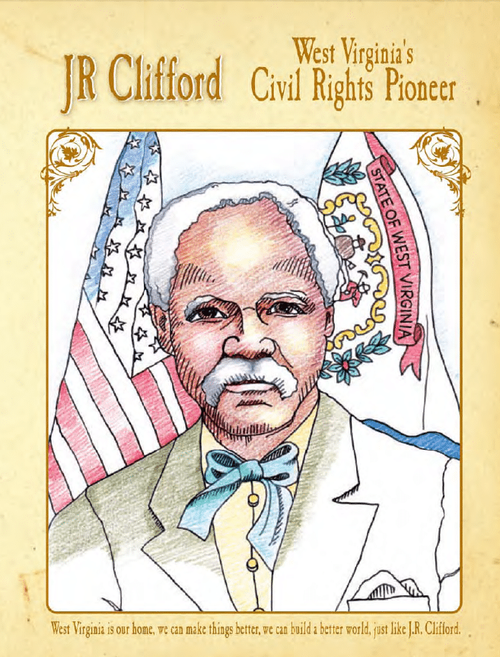
John Robert (J.R.) Clifford was a trailblazing African American lawyer, educator, and activist whose work continues to inspire the fight for justice. Clifford's landmark legal battles, including the landmark ruling on November 16, 1898 in Williams v. Board of Education of Fairfax District, highlight his profound impact on civil rights and democracy.
Situated at the top of the hill in the center of Cumberland, Emmanuel Parish stands for all to see. Visitors are drawn to the church on the hill with the steeple. Once inside, Emmanuel tells the story of our country from its earliest times to today. Situated at the crossroads of Native American trails and natural waterways, Cumberland and Emmanuel were known roads of freedom. It is believed that the original foundations underneath the church were used as a stop on the Underground Railroad.
Following the Battle of Blair Mountain, a U.S. Army Air Service Martin NBS-MB-1*—Bomber No. 5—crashed near Drennen, Nicholas County, West Virginia. Its role in suppression of the largest armed uprising since the Civil War was thereby etched into the hills of West Virginia and into the labor history of our Nation.

J.R. Clifford was a lawyer, teacher, newspaper editor, and soldier. He was the first black lawyer to practice law before the West Virginia Supreme Court of Appeals. In the case Carrie Williams v. The Board of Education Fairfax District, he successfully argued that "discrimination against people because of color alone as to privileges, immunities and equal protection of the law is unconstitutional" more than 50 years before Brown v. Board of Education.
