By Hayley Sutton
Serving With Canaan Valley National Wildlife Refuge
A vernal pool is a seasonally flooded wetland usually ranging in size from small puddles to shallow lakes. Water from snowmelt and spring rain collects in depressions of bed rock or hard clay. They may dry up and refill throughout the season or not fill at all depending on spring precipitation. By summer they are usually dried up for the rest of the year. In dry seasons seeds, eggs, or cysts can lie dormant and grow and reproduce when the pools fill with water again.
Many bird species use them as a source of food and water. Many amphibian species use vernal pools for breeding and hatching grounds. There is a careful balance these amphibians must have when depositing eggs; too early the eggs might freeze or too late and they might not complete development before the pool dries up. Frog and salamander egg masses can be easily differentiated. Frog eggs are individually defined within the mass. Salamander eggs have a transparent gel layer that surrounds the entire egg mass.
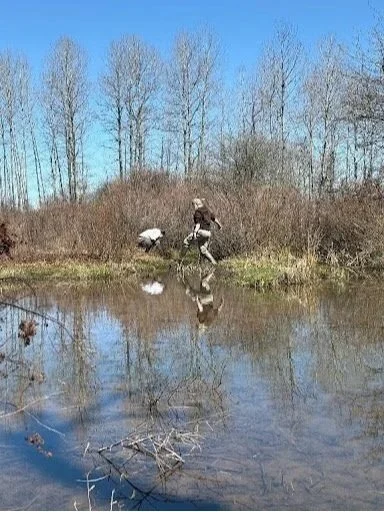
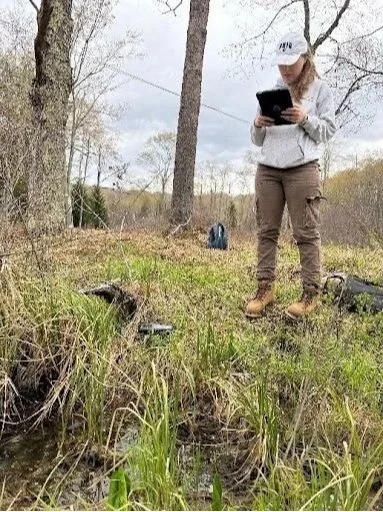
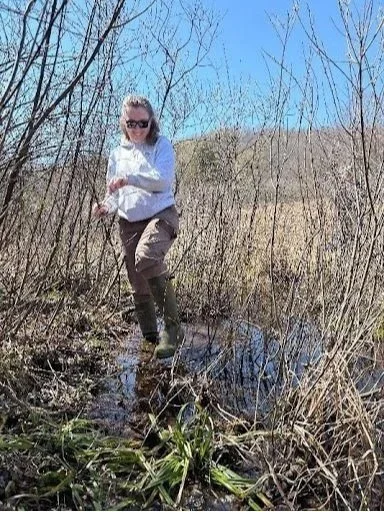
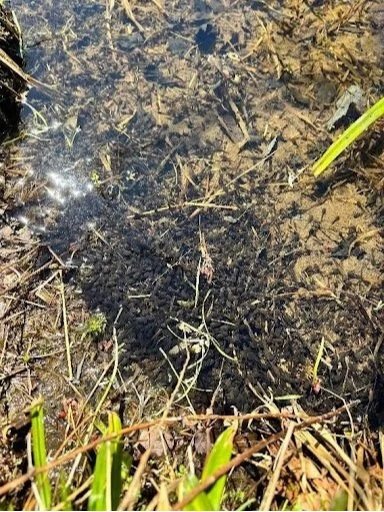
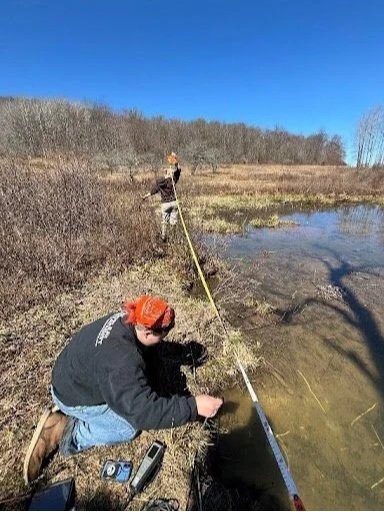
Vernal pool monitoring has been conducted on Canaan Valley National Wildlife Refuge since 2001 and has been partnered with United States Geological Survey (USGS) ARMI (Amphibian Research and Monitoring Initiative) since 2004. I was given the opportunity to run as lead for this year’s vernal pool monitoring. There are 49 survey points throughout the refuge where the two other AFNHA AmeriCorps members and I conducted visual encounter surveys (VES) and dipnet surveys. Visual encounter surveys are done in spring when eggs are laid and dipnet surveys are conducted in summer after eggs hatch to observe tadpoles and larvae. Vernal pool habitats are declining which then causes declines in amphibian species that use them to reproduce. This makes monitoring even more important. In addition to species identification, we monitor water temperature, conductivity, pH, length, width, depth, and turbidity (clarity) of the vernal pool and weather conditions.
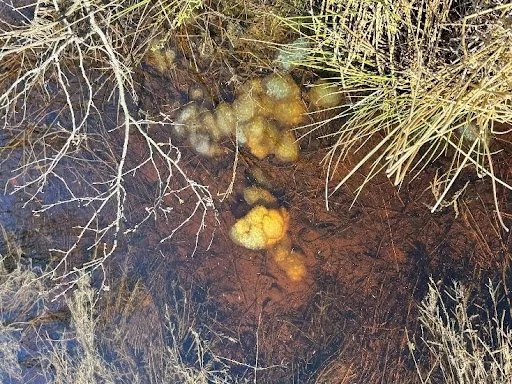
Visual encounter surveys began in March and continued through early May. Each point is surveyed twice. This winter’s snow and ice melt filled the pools quickly but without regular precipitation afterwards many of the pools I surveyed had dried up. The pools that didn’t dry up had either spotted salamander or wood frog egg masses or both! We walked the perimeter of a pool counting the egg masses or flipping cover objects looking for salamanders. You can find a few or hundreds of egg masses in a vernal pool. Sometimes an eastern newt was spotted in the egg masses or swimming around in the vernal pool. Spring peppers, American bullfrogs, and green frogs were also spotted in or around some vernal pools.
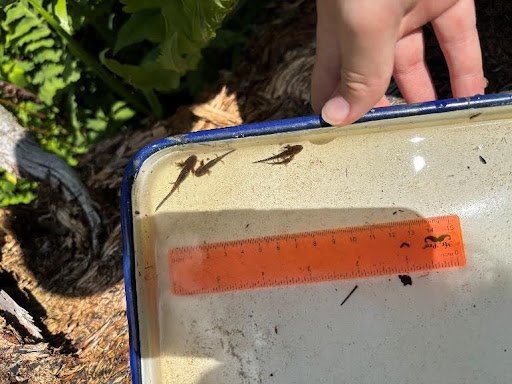
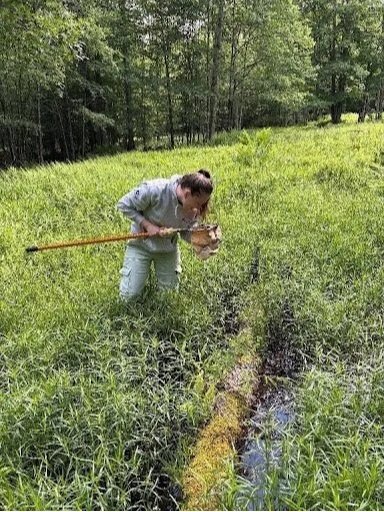
Dipnet surveys began in June. Since many vernal pools were dried up during visual encounter surveys, we didn’t visit all 49 points again for dipnet surveys. Like the visual encounter surveys, we are looking for both spotted salamander larvae and wood frog tadpoles but document any other amphibian species found in or around the pools. The size of an individual vernal pool determines how many net sweeps are made. The first couple that I surveyed were very shallow and wasn’t expecting to find anything but was pleasantly surprised to find a couple spotted salamander larvae. At larger pools, I found eastern newts and American bullfrog tadpoles.
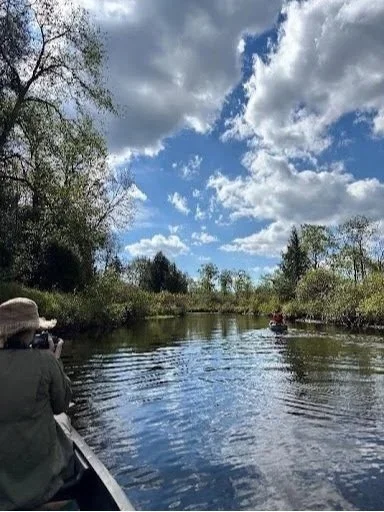
I get to see a lot of Canaan Valley National Wildlife Refuge when doing these surveys. It’s a beautiful place to serve. I spent a whole day canoeing to vernal pool points along the Blackwater River. I saw large beaver dams in the middle of the Canaan Valley. Large vernal pools with hundreds of egg masses.