
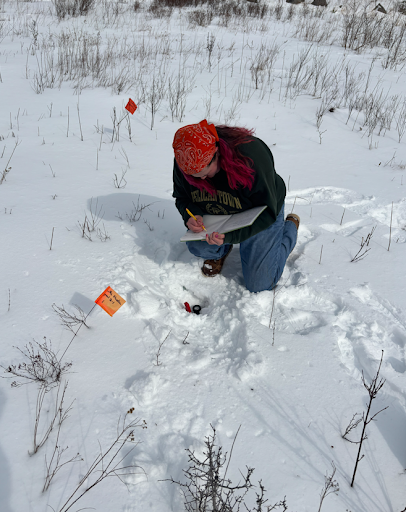
Monitoring soil humidity and temp for outdoor propagation plots
By Elizabeth Mahoney
Serving With Canaan Valley National Wildlife Refuge
For my major project, I was tasked with identifying and propagating shrubs and trees best suited to shading out invasive reed canary grass. The idea was to develop a timeline and method of propagation that future AmeriCorps will follow years down the line when the meadow is ready to be reclaimed. As an added challenge, I was assigned this project in November, so I had to figure out how to identify the plants I needed during their dormant stage which, let me tell you, is pretty hard for a novice botanist.
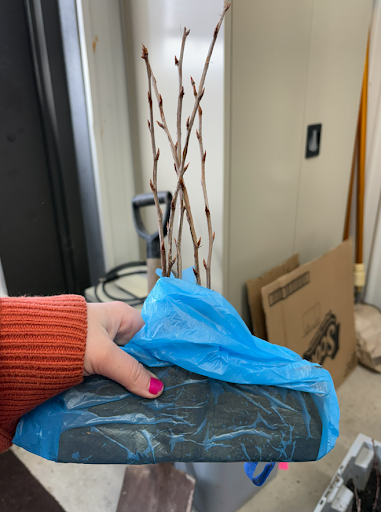
Appalachian gooseberry cuttings stored in plastic bags with cardboard
It took a few months of researching different methods of propagation and identifying the host plants I wanted to propagate from before I got the chance to get my hands dirty. Even then, I knew that most of the species I selected were extremely difficult to propagate from in the winter, and that I would have to be growing them in less-than-ideal conditions. I thought that all of my cuttings would die and the time I spent on this round of cuttings was pointless.
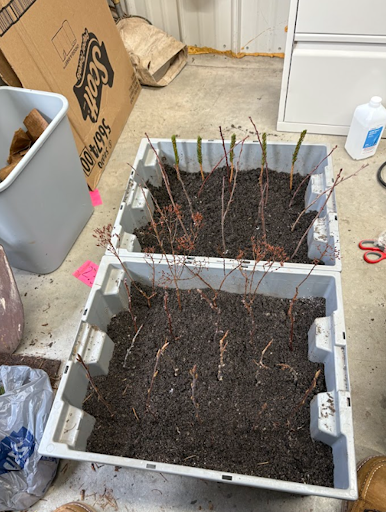
Cuttings in indoor soil container propagation method
I monitored them regularly for months, watering them and trying to keep them warm despite the frigid temperatures of Canaan Valley. It took over 2 months of patiently tending to my cuttings for me to see any change at all, but wow was it exciting to see the first little questing roots peek out from the seemingly dead twigs! Within 2 weeks of the first sign of life, one of my serviceberry cuttings produced a beautiful white flower, the first sign of spring here in the mountains. This little flower made me appreciate the patience and faith required when working with plants, how they are both stubborn and forgiving. Faith that the seemingly lifeless twigs of winter will once again explode in decadent petals, that the resilience of plants will continue even if I doubt myself.
As a conservationist, I can say that most of the time we don’t get to see the benefits of our work. We remove invasive plants with the hope that native ones will move in years down the line. We plant 8” saplings that we will never get to see grow into the 80’ giants that form the backbone of our forests. We do months of research and planning that might never come to fruition, and yet we do it anyway. After all, “a society grows great when old men plant trees under whose shade they know they’ll never sit.” - Joycelyn Elders, 1992.
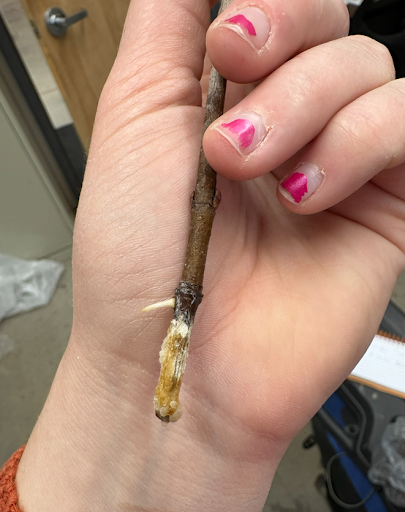
First little root to develop!
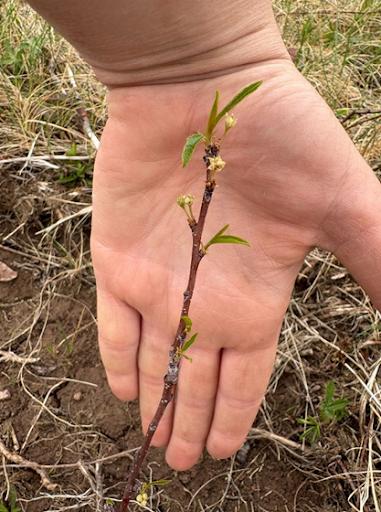
Pin cherry outdoor cutting producing leaves and little flowers
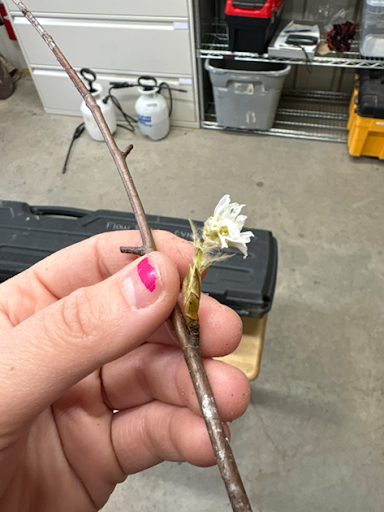
Downy serviceberry cutting producing a little white flower
This project helped me appreciate the beauty in work that goes unseen, like the roots of a new cutting forming just below the surface. These roots represent the growth, adaptability, and resilience of nature given room to bloom, but they also show how it takes time and careful tending to heal the wounds inflicted before we can grow anew.
