
By Harmon Lanager
Neither snow nor rain nor heat nor gloom of night can stop the U.S. Postal Service. But, in the early settler days of West Virginia, mail delivery faced unique challenges. Towns were spread out, roads were poorly maintained, and getting lost was easy. Yet, through the work of countless individuals, the system improved and expanded.
In 1794, the first official post offices in what would become West Virginia opened. One was in Morgantown, and the other was in Wheeling. Yet, for years, mail was not delivered to those living in the more rural areas of the state. One Congressman, named James O’Donnell, proposed to establish a rural mail service in 1892 but was unsuccessful.
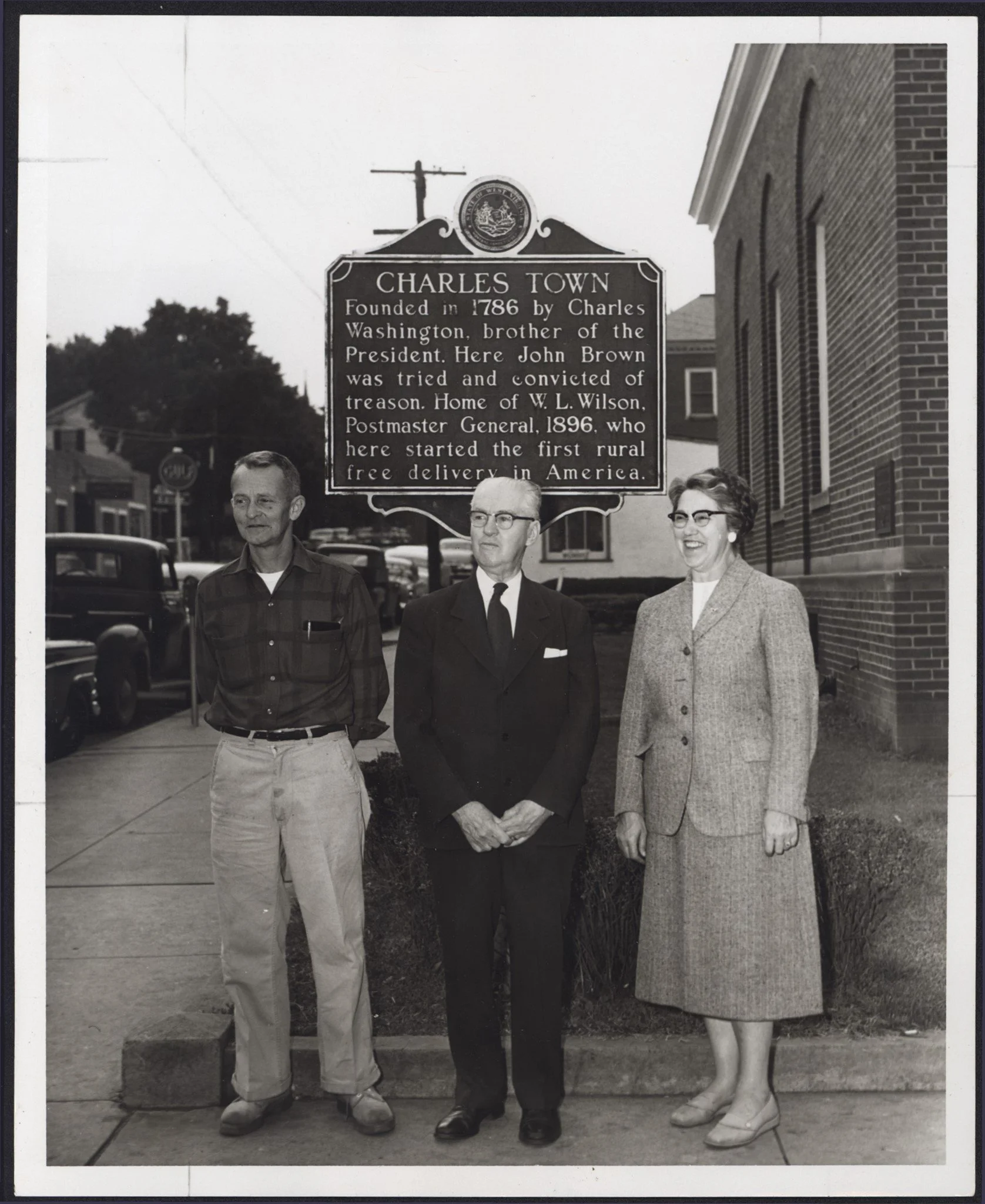
Progress had to wait until three years later. Postmaster General William Wilson conducted an experiment with a limited rural mail delivery system. If it proved possible, the system would be expanded across the nation. The experiment began with the hiring of five rural couriers on Oct. 1st, 1896. Their names were Harry Gibson, Frank Young, John Lucas, Keges Strider, and Melvin Strider.
The service was not standardized. Each carrier provided their own transportation, and it was not until after the turn of the century that uniform mail boxes were introduced. But ultimately, the experiment proved successful and rural delivery was established for good.
In 1919, Harry Gibson retired. His replacement was not only the state’s first female mail carrier, a woman named Vesta Watters Jones, but she also was one of the first to use an automobile. Many at the time doubted that a woman could handle the job of rural mail delivery, and, on top of that, the winter that year was extremely harsh. Supposedly, 18 inches of ice formed on the Shenandoah River.
Regardless, Jones performed her duties with unmatched dedication. She only missed work two times in her 42-year career. Jones was so devoted to her job that, in 1937, she delivered the mail, gave birth to her son that night, and then was back on the job the next day! Over the course of her career, she drove roughly over half a million miles - with only one accident on her record. Said accident was not even her fault as she was run off the road by an oncoming truck. She ended her long, prestigious career on February 3, 1961.
One of West Virginia’s early offices can still be found in a surprising place: The Smithsonian. In 1971, Carl Scheele, the curator of the Smithsonian Postal Museum, visited Headsville, West Virginia. His goal, in his own words, was to find a "single institution that has been common to virtually every American's experience for 200 years.” The institution he decided on was the Postal Service.
There, he purchased the historic post office built by Henry Head in the 1860’s. Henry Head was the postmaster of the Mineral County area since 1855, back when it was still part of Virginia. The post office faithfully served the region until closing in 1909. The Smithsonian purchased it for $7,500.
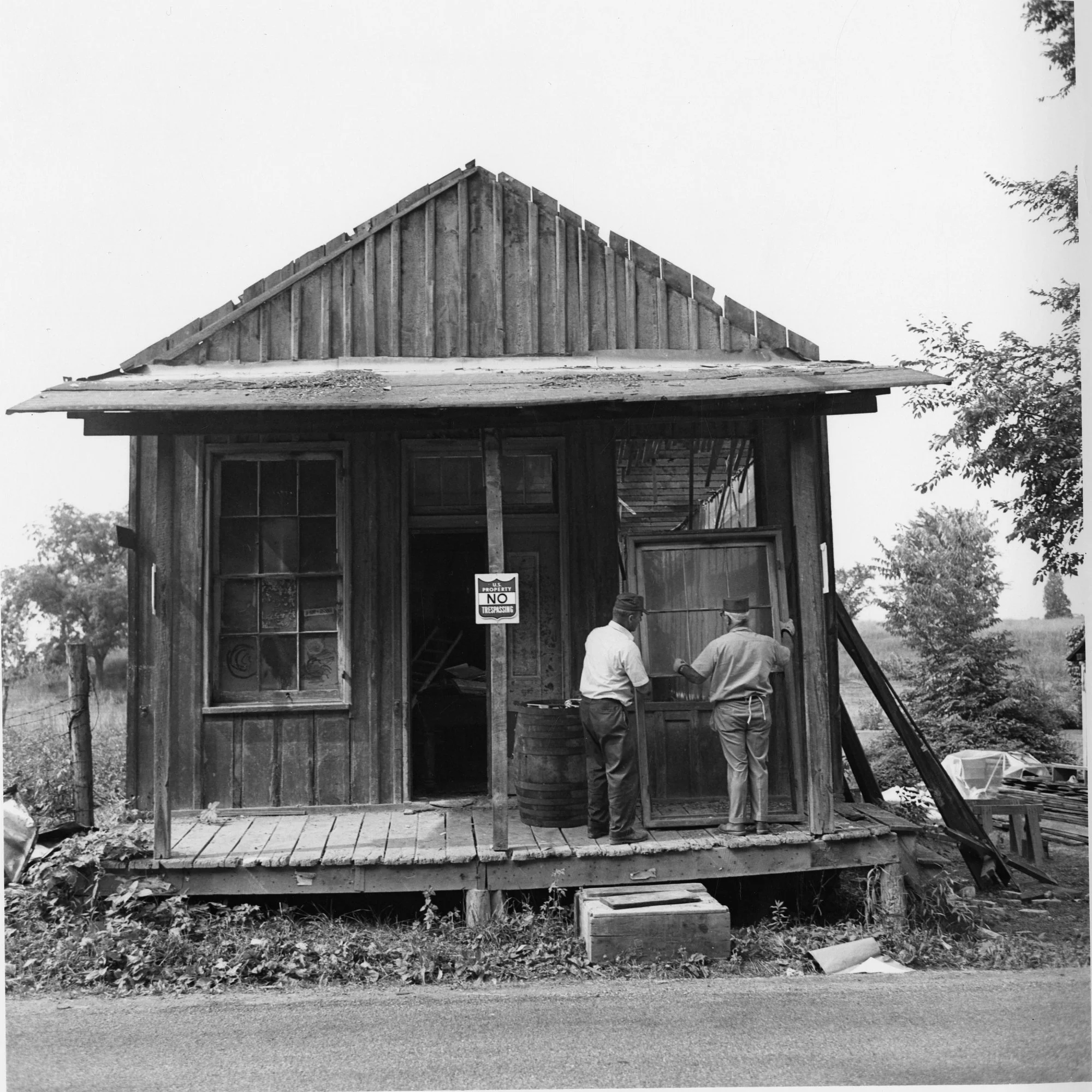
Museum of History and Technology, Post Office. Smithsonian Institution Archives, Image Number SIA RU000285 [SIA2010-2988].
Two restoration experts, Charles H. Roswell and Reverdy Marcy, were brought in to the project. Their job was to completely and carefully dismantle the post office, transport it to the Smithsonian Institute, and then, once in the museum’s storage, put it all back together again.
The Headsville Post Office was stored in the National Museum of History and Technology, where it received an extravagant opening on September 27th, 1971. The ceremony involved the color-guard of the 3rd United States Infantry, a speech from the museum’s director, and the display of the office’s first piece of mail. It would remain there until 2006 when it was given on loan to the American Philatelic Center in Bellefonte, Pennsylvania. It can still be seen there today.
