
By Caleb Nolan, Serving With The Barbour County Historical Museum
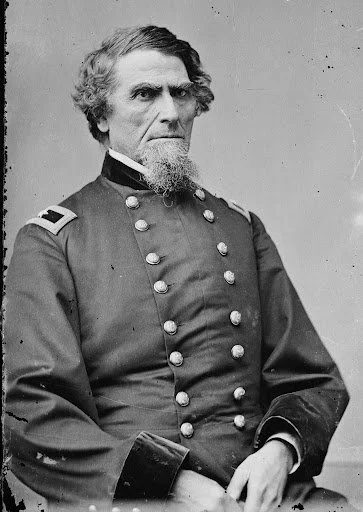
Photograph of Benjamin F. Kelley (a copy of this photo is on display in the Barbour County Historical Museum)
Benjamin Franklin Kelley was a native of New Hampshire, who moved to Wheeling, Virginia (now West Virginia) in 1826 at the age of nineteen. Benjamin Kelley became a freight agent for the Baltimore and Ohio Railroad by the outbreak of the American Civil War in 1861. Kelley left his position with the railroad and moved back to Wheeling to enlist in the Army at the start of the Civil War.
Kelley was made a colonel and commander of the 1 st Virginia Volunteer Infantry Regiment formed In Wheeling on May 10, 1861, as a result of President Lincoln’s call to arms (the regiment would be renamed to the First West Virginia Volunteer Infantry following the formation of the state). The regiment consisted of volunteers mostly from the northern panhandle of what is now West Virginia who remained loyal to the Union, and resistant to the State of Virginia’s secession along with men from Ohio and Pennsylvania. Their service began just a few days from the First Wheeling Convention, which began on May 13, 1861. The Convention was held to determine the future of the twenty-seven counties of western Virginia in regard to their response of Virginia’s secession against the United States.
While the Wheeling Convention was in session, the First Virginia Volunteer Regiment was sent out of Wheeling to secure various positions along the Baltimore and Ohio Railroad that had been damaged or interfered with by rebel soldiers. The regiment was ordered to secure the railroad junction in Grafton, which lead them to the town of Philippi. Philippi was under Confederate control at this time, and Colonel Kelley devised a battleplan with the help of soldiers from Ohio and Indiana to chase the Confederate forces out of Philippi. The Battle of Philippi became the first military engagement of the Civil War on land.
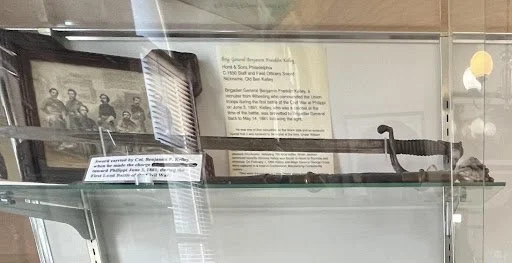
Bejamin Kelley’s sabre used during the Civil War (on display at the Barbour County Historical Museum)
Benjamin Kelley did lead his men into battle himself, and was nearly mortally wounded. Initially, the official report stated that Kelley had died of his wounds. However, Colonel Kelley did eventually recover and spent his time in Philippi until he could return to his command. Kelley would eventually be promoted to a general and served in the battles of Philippi, Romney, Hanging Rock Pass, Gettysburg, Flock’s Mill, and Moorefield. Kelly obtained a horse while he was in Barbour County, which he named, “Philippi”. Philippi the horse remained Kelly’s steed until Kelley’s brief capture.
Benjamin Kelley’s service to the United States Army and his leadership at the Battle of Philippi are important chapters in the history of the State of West Virginia. Kelley represents West Virginians who were loyal to the ideals of the United States, and who resisted the secession of the State of Virginia during the American Civil War. His efforts in Philippi helped solidify the eventual creation of the State of West Virginia.
Sources:
https://archive.wvculture.org/history/statehood/statehood05.html
The Tygarts Valley Line: June-July 1861 by Eva Margaret Carnes
